


Painting my CBR..


Junior Member
Joined: Nov 2011
Posts: 13
Likes: 0
From: Wayne, NJ

The thing about a spray gun is its a ridiculously simple tool. It just doesn't need to be insanely precise to spray an acceptable pattern, especially for small jobs and simple colors. If you were doing large panels in metals or heavy pearls or doing alot of blending then the spray patterns would need to be as precise as possible.
Expensive guns are really designed for expensive paint jobs (talking about pearl and metals that are senstive to the tip size).
Even at that point, you still need ALOT of experience as a expensive gun is no guarantee for a good job.
I asked her if she would want to do a pearl job and he told me to come back after 2 more years of riding.

Junior Member
Joined: Nov 2011
Posts: 13
Likes: 0
From: Wayne, NJ
Since I'm new here I can't be partial to anyones opinion or step on toes. I'll just tell it like it is.
First, the OP is new to painting so all the expert advice from trail and error isn't going to help him a lot. He needs his own trail and error.
You can get a perfect paint job from rattle cans if you want to spend the time. The problem is --- they are NOT HARD. I've heard there is a new product out, in a can, that when you use it, there is an attached section of can that is punctured which allows the hardener to mix into the paint. I don't know anything about this except what I have written.
The $15 gun at Harbor Freight is freaking awesome. I've seen it on sale for $10, so if you're worried about parts, buy 2 or 3 of them and you will still have less money than a name brand gun. Plus, it is a copy of a name brand gun and a Binks head will screw right on to the gun but not necessary.
The hardest part about learning to paint is correcting your errors. This is really isn't hard --- just time consuming. If you put on too much or if the gun spits or if it's too humid and the paint wants to run from moisture droplets, these are all simple problems that can be sanded out but please do yourself a favor and never use sandpaper any courser than 600 grit when you wet sand. The idea of sanding is to remove as little paint as possible. Practice a little with your gun learning how to adjust the spray to a fine mist. Make sure you have a water filter in line.
Between coats 2000 grit is best. Like others have said --- find a professional auto body supply store and get your paint and clear coat and hardener, reducer and fish eye from them. Then, build up a bunch of coats of paint sanding between coats to remove imperfections. Do the same with clear coat and you will end up with a professional job. You are not suppose to spray if the humidity is above 70%.
Prep is the most important part but wet sanding will remove all mistakes anyway --- so don't worry about it and go to work.
First, the OP is new to painting so all the expert advice from trail and error isn't going to help him a lot. He needs his own trail and error.
You can get a perfect paint job from rattle cans if you want to spend the time. The problem is --- they are NOT HARD. I've heard there is a new product out, in a can, that when you use it, there is an attached section of can that is punctured which allows the hardener to mix into the paint. I don't know anything about this except what I have written.
The $15 gun at Harbor Freight is freaking awesome. I've seen it on sale for $10, so if you're worried about parts, buy 2 or 3 of them and you will still have less money than a name brand gun. Plus, it is a copy of a name brand gun and a Binks head will screw right on to the gun but not necessary.
The hardest part about learning to paint is correcting your errors. This is really isn't hard --- just time consuming. If you put on too much or if the gun spits or if it's too humid and the paint wants to run from moisture droplets, these are all simple problems that can be sanded out but please do yourself a favor and never use sandpaper any courser than 600 grit when you wet sand. The idea of sanding is to remove as little paint as possible. Practice a little with your gun learning how to adjust the spray to a fine mist. Make sure you have a water filter in line.
Between coats 2000 grit is best. Like others have said --- find a professional auto body supply store and get your paint and clear coat and hardener, reducer and fish eye from them. Then, build up a bunch of coats of paint sanding between coats to remove imperfections. Do the same with clear coat and you will end up with a professional job. You are not suppose to spray if the humidity is above 70%.
Prep is the most important part but wet sanding will remove all mistakes anyway --- so don't worry about it and go to work.
They straight up told me the same thing. It is all about prep work. She told me if I take the time to sand between coats, I will get very, very nice results.
I am not expecting a professional job. I am just expecting a decent job. I am actually looking forward more to the experience and learning that comes with this job than anything else.
I mean worst case, ABSOLUTELY worst case, she told me break out some 100 grit sandpaper and bam, you are back to where you started.

Nov 2011 ROTM
Joined: May 2010
Posts: 655
Likes: 0
From: O-Town

Thanks.

I think theres plenty of info here for anyone to make an informed decision on so I leave to you guys from here. Have a good one.
Nov 2011 ROTM
Joined: May 2010
Posts: 655
Likes: 0
From: O-Town
Since I'm new here I can't be partial to anyones opinion or step on toes. I'll just tell it like it is.
First, the OP is new to painting so all the expert advice from trail and error isn't going to help him a lot. He needs his own trail and error.
You can get a perfect paint job from rattle cans if you want to spend the time. The problem is --- they are NOT HARD. I've heard there is a new product out, in a can, that when you use it, there is an attached section of can that is punctured which allows the hardener to mix into the paint. I don't know anything about this except what I have written.
The $15 gun at Harbor Freight is freaking awesome. I've seen it on sale for $10, so if you're worried about parts, buy 2 or 3 of them and you will still have less money than a name brand gun. Plus, it is a copy of a name brand gun and a Binks head will screw right on to the gun but not necessary.
The hardest part about learning to paint is correcting your errors. This is really isn't hard --- just time consuming. If you put on too much or if the gun spits or if it's too humid and the paint wants to run from moisture droplets, these are all simple problems that can be sanded out but please do yourself a favor and never use sandpaper any courser than 600 grit when you wet sand. The idea of sanding is to remove as little paint as possible. Practice a little with your gun learning how to adjust the spray to a fine mist. Make sure you have a water filter in line.
Between coats 2000 grit is best. Like others have said --- find a professional auto body supply store and get your paint and clear coat and hardener, reducer and fish eye from them. Then, build up a bunch of coats of paint sanding between coats to remove imperfections. Do the same with clear coat and you will end up with a professional job. You are not suppose to spray if the humidity is above 70%.
Prep is the most important part but wet sanding will remove all mistakes anyway --- so don't worry about it and go to work.
First, the OP is new to painting so all the expert advice from trail and error isn't going to help him a lot. He needs his own trail and error.
You can get a perfect paint job from rattle cans if you want to spend the time. The problem is --- they are NOT HARD. I've heard there is a new product out, in a can, that when you use it, there is an attached section of can that is punctured which allows the hardener to mix into the paint. I don't know anything about this except what I have written.
The $15 gun at Harbor Freight is freaking awesome. I've seen it on sale for $10, so if you're worried about parts, buy 2 or 3 of them and you will still have less money than a name brand gun. Plus, it is a copy of a name brand gun and a Binks head will screw right on to the gun but not necessary.
The hardest part about learning to paint is correcting your errors. This is really isn't hard --- just time consuming. If you put on too much or if the gun spits or if it's too humid and the paint wants to run from moisture droplets, these are all simple problems that can be sanded out but please do yourself a favor and never use sandpaper any courser than 600 grit when you wet sand. The idea of sanding is to remove as little paint as possible. Practice a little with your gun learning how to adjust the spray to a fine mist. Make sure you have a water filter in line.
Between coats 2000 grit is best. Like others have said --- find a professional auto body supply store and get your paint and clear coat and hardener, reducer and fish eye from them. Then, build up a bunch of coats of paint sanding between coats to remove imperfections. Do the same with clear coat and you will end up with a professional job. You are not suppose to spray if the humidity is above 70%.
Prep is the most important part but wet sanding will remove all mistakes anyway --- so don't worry about it and go to work.

Senior Member
Joined: Aug 2010
Posts: 477
Likes: 8
Me personally I've seen the results of a 15 dollar sprayer.... actually 30 that was used for priming a helmet my son was getting ready to paint. Spit,spit spit spit. I guess theres two here that have had a good experience. Great for you. Me... I want results. The OP said in a post that they asked a painter and his daughter with 45 years experience and they told him the same. Then why come here to ask the same question when you just asked someone with about a 1/2 century experience??? You must of got the answer you wanted to hear I'd imagine no offense. I use all Sata stuff. I go with what I know works great is all. It sounds like your after satisfactory results and thats fine. My advice if you were to paint more as a hobby you'd have a piece of equipment that is a solid piece to grow into and have for many many years to come. Painting is a great hobby and it can get addicting also.
Senior Member
Joined: Aug 2010
Posts: 477
Likes: 8
Your comparing a 500 dollar fishing pole as if I was telling him to buy a 500 dollar sprayer. I was mearly telling him to buy used.And sorry but I do know how to set up a sprayer just fine thank you. Having guns for each step of painting is the way I do so. I gave my opinion on that. You and others hold it against me for saying what I feel is the way to go. Funny the OP asks for advice and get advice from a experienced painter..... painter then gets involved with forum conversation to later introduce themselves as the experieced painter the OP got advice from before asking advice hear. Now that I find well.... ok.lol And heres to your 45 years experince..... i wasn't down playing. But I know my way around a gun.
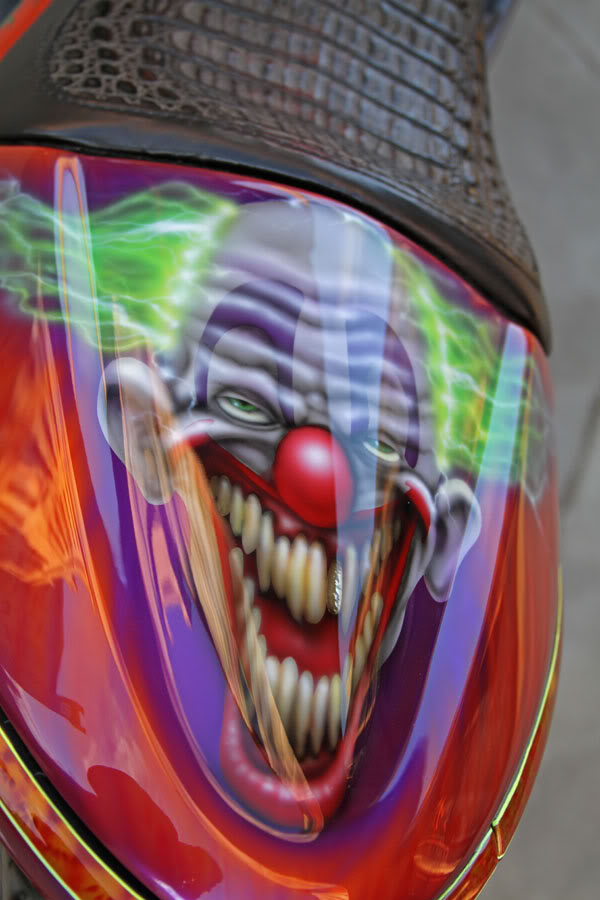
Last edited by BadS1; Mar 6, 2012 at 09:43 PM. Reason: ADD PIC
Junior Member
Joined: Nov 2011
Posts: 13
Likes: 0
From: Wayne, NJ
Me personally I've seen the results of a 15 dollar sprayer.... actually 30 that was used for priming a helmet my son was getting ready to paint. Spit,spit spit spit. I guess theres two here that have had a good experience. Great for you. Me... I want results. The OP said in a post that they asked a painter and his daughter with 45 years experience and they told him the same. Then why come here to ask the same question when you just asked someone with about a 1/2 century experience??? You must of got the answer you wanted to hear I'd imagine no offense. I use all Sata stuff. I go with what I know works great is all. It sounds like your after satisfactory results and thats fine. My advice if you were to paint more as a hobby you'd have a piece of equipment that is a solid piece to grow into and have for many many years to come. Painting is a great hobby and it can get addicting also.
I never asked any questions besides which sprayer did one of the posters had.
I honestly don't paint as a hobby, nor do I plan on doing it. I am just painting these motorcycle panels since they are all different colors and I don't want to bother the girl and her father to paint something that is more than likely going to get scratched up soon.
From what they have told me is that the better quality of sprayers that you have, the easier it is to put down thicker wet coats without getting orange peel. At the same time, you need to be an experienced painter to get professional results from a professional sprayer. In my hands, a professional sprayer is worthless since I can't put down a wet coat.

Thread Starter
|
Member
Joined: Jun 2009
Posts: 47
Likes: 0
Guys guys, questions were answered.. thanks
Now... my front upper cowl is missing the two mount holes for my "fuse panels" is there anyway i could rig something up to mount these, as currently they are just dangling around...
Now... my front upper cowl is missing the two mount holes for my "fuse panels" is there anyway i could rig something up to mount these, as currently they are just dangling around...
Junior Member
Joined: Nov 2011
Posts: 13
Likes: 0
From: Wayne, NJ
Your comparing a 500 dollar fishing pole as if I was telling him to buy a 500 dollar sprayer. I was mearly telling him to buy used.And sorry but I do know how to set up a sprayer just fine thank you. Having guns for each step of painting is the way I do so. I gave my opinion on that. You and others hold it against me for saying what I feel is the way to go. Funny the OP asks for advice and get advice from a experienced painter..... painter then gets involved with forum conversation to later introduce themselves as the experieced painter the OP got advice from before asking advice hear. Now that I find well.... ok.lol And heres to your 45 years experince..... i wasn't down playing. But I know my way around a gun.
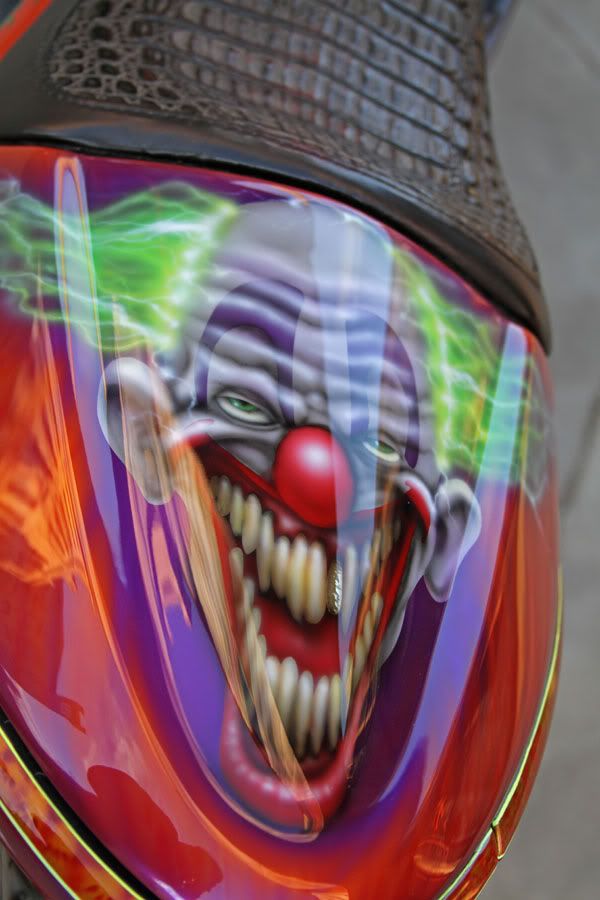
I am not 100% sure what was said but I never claimed to be an experienced painter. Before the thread even started, I was going to spray paint the bike, but after working the numbers, it was actually cheaper for me to do a real paint job. THIS is when I called up the experienced painter for advice and she told me everything I needed to know. I figured I would share what she said.
You might want to re-read anything I posted. I never said I had 45 years experience painting....