


handle bars


A chizzle. Like what they use to scrape off small pieces of cement. The guy use to be a mechanic at the harley dealer so i trusted him with my bike. My forks are tightened now and the bike has been riding good. When the weather gets nice out i'll start taking pieces off to check the whole bike.
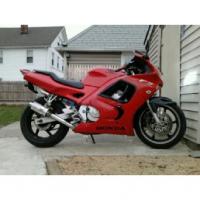
I will check it once when the weather gets better. The guy doesnt work at harley anymore. I dont know much about bikes since this is my first bike and im new to sport bikes. I will get the book and start looking into everything so it can be good to ride.

Retired Super Moderator - At large E=MC2
Joined: Feb 2011
Posts: 2,299
Likes: 4
From: Tulsa,OK
The ONLY way to torque the steering-head nut properly is with the special
socket/adapter. Finding one is a pain and expensive for a one-use item.
(Hopefully, you upgraded to roller-bearings, which should last the rest of
the bike's life.)
Making one is feasible (and also quite the pain). If you want to be absolutely sure,
either spring for the adapter, make one, or pay someone with the proper tool to do
the final torque.
(Taking money for work when you don't have the proper tools/knowledge
and follow proper procedures, is criminal in my book. That, however, is an entirely different subject of discussion.)
That said....
I used a pipe-wrench and a spring scale (to measure the resistance turning side-to-side,
using a value listed in the manual). Doing so, hasn't caused any discernable
handling/safety issues, imo.
************************************************** *********
I DO NOT recommend ANY variation from the procedures defined in the manual for others.
I've been working on/riding bikes long enough, that in my judgement, the risk was acceptable for ME.
I almost didn't post the "that said" portion of my comment, but there are others on these
forums who have the knowledge/confidence to try similar 'short-cuts', as well.
Thus, I'm presenting that section for peer-review/comments.
************************************************** *********
Ern
socket/adapter. Finding one is a pain and expensive for a one-use item.
(Hopefully, you upgraded to roller-bearings, which should last the rest of
the bike's life.)
Making one is feasible (and also quite the pain). If you want to be absolutely sure,
either spring for the adapter, make one, or pay someone with the proper tool to do
the final torque.
(Taking money for work when you don't have the proper tools/knowledge
and follow proper procedures, is criminal in my book. That, however, is an entirely different subject of discussion.)
That said....
I used a pipe-wrench and a spring scale (to measure the resistance turning side-to-side,
using a value listed in the manual). Doing so, hasn't caused any discernable
handling/safety issues, imo.
************************************************** *********
I DO NOT recommend ANY variation from the procedures defined in the manual for others.
I've been working on/riding bikes long enough, that in my judgement, the risk was acceptable for ME.
I almost didn't post the "that said" portion of my comment, but there are others on these
forums who have the knowledge/confidence to try similar 'short-cuts', as well.
Thus, I'm presenting that section for peer-review/comments.
************************************************** *********
Ern

The ONLY way to torque the steering-head nut properly is with the special
socket/adapter. Finding one is a pain and expensive for a one-use item.
(Hopefully, you upgraded to roller-bearings, which should last the rest of
the bike's life.)
Making one is feasible (and also quite the pain). If you want to be absolutely sure,
either spring for the adapter, make one, or pay someone with the proper tool to do
the final torque.
(Taking money for work when you don't have the proper tools/knowledge
and follow proper procedures, is criminal in my book. That, however, is an entirely different subject of discussion.)
That said....
I used a pipe-wrench and a spring scale (to measure the resistance turning side-to-side,
using a value listed in the manual). Doing so, hasn't caused any discernable
handling/safety issues, imo.
************************************************** *********
I DO NOT recommend ANY variation from the procedures defined in the manual for others.
I've been working on/riding bikes long enough, that in my judgement, the risk was acceptable for ME.
I almost didn't post the "that said" portion of my comment, but there are others on these
forums who have the knowledge/confidence to try similar 'short-cuts', as well.
Thus, I'm presenting that section for peer-review/comments.
************************************************** *********
Ern
socket/adapter. Finding one is a pain and expensive for a one-use item.
(Hopefully, you upgraded to roller-bearings, which should last the rest of
the bike's life.)
Making one is feasible (and also quite the pain). If you want to be absolutely sure,
either spring for the adapter, make one, or pay someone with the proper tool to do
the final torque.
(Taking money for work when you don't have the proper tools/knowledge
and follow proper procedures, is criminal in my book. That, however, is an entirely different subject of discussion.)
That said....
I used a pipe-wrench and a spring scale (to measure the resistance turning side-to-side,
using a value listed in the manual). Doing so, hasn't caused any discernable
handling/safety issues, imo.
************************************************** *********
I DO NOT recommend ANY variation from the procedures defined in the manual for others.
I've been working on/riding bikes long enough, that in my judgement, the risk was acceptable for ME.
I almost didn't post the "that said" portion of my comment, but there are others on these
forums who have the knowledge/confidence to try similar 'short-cuts', as well.
Thus, I'm presenting that section for peer-review/comments.
************************************************** *********
Ern
Retired Super Moderator - At large E=MC2
Joined: Feb 2011
Posts: 2,299
Likes: 4
From: Tulsa,OK
Hah! lol ;-)
I know I get overly serious/cautious at times, I just worry some inexperienced
mechanic will screw up and have a critical failure resulting in injury.
Ern
I know I get overly serious/cautious at times, I just worry some inexperienced
mechanic will screw up and have a critical failure resulting in injury.
Ern

Member
Joined: Dec 2011
Posts: 46
Likes: 0
From: Indiana
Being overly cautious in areas such as steering and suspension is a good thing. I've converted the steering head bearings on my '75 cb550 to the All ***** tapered bearings early last year and I think they're well worth the investment.

Member
Joined: Jun 2011
Posts: 77
Likes: 0
A chizzle. Like what they use to scrape off small pieces of cement. The guy use to be a mechanic at the harley dealer so i trusted him with my bike. My forks are tightened now and the bike has been riding good. When the weather gets nice out i'll start taking pieces off to check the whole bike.
 A Harley mechanic? You let him loose on a Honda?
Thanks for all the input guys. When schools over im going to check the bike out fully. The guy's son had a cbr for his bike also and now he has a gsxr. My fork has been fine since but i havent riden it in some time now.