


carb help




sorry about pics ... but first one is a slow jet that is broken would that affect anything/ next one is about the brass tubes on top. what do they do? please explain this to me thanks

Super Moderator
Joined: Aug 2006
Posts: 5,304
Likes: 512
From: South Florida, USA
Apology accepted, your right the pictures suck, but they get the point across. In answer to your question, yes it will effect the operation of the carburetor and you need to get it out. Since it's broken, I'd use a pair of small vice-grips to grab it and try to twist it out. Just order a new slow jet to replace it.
Now, for the tubes.
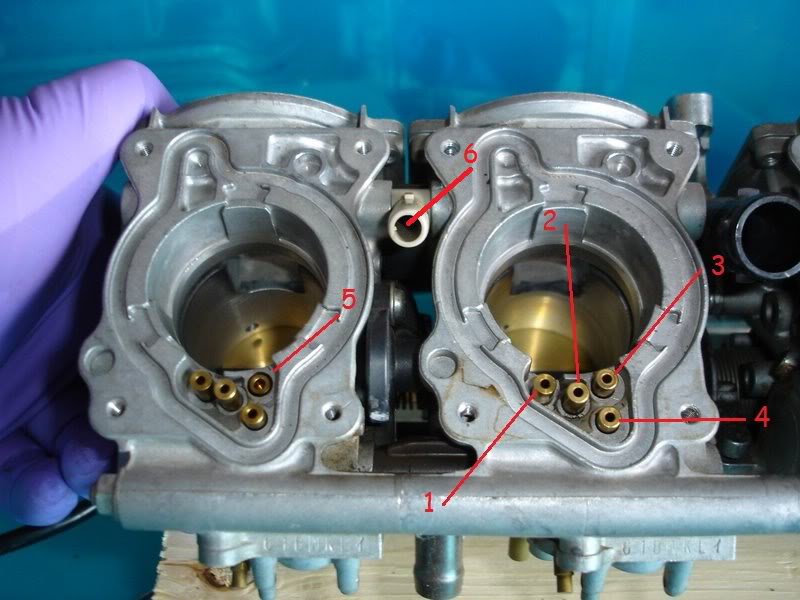
We'll start with the Air Intake side. Carburetors are highly engineered devices that mix air and fuel. So naturally they need places to get air and they need places to get fuel. Air and fuel start to mix before they get into the intake or throat of the carburetor.
Now, for the Fuel side.
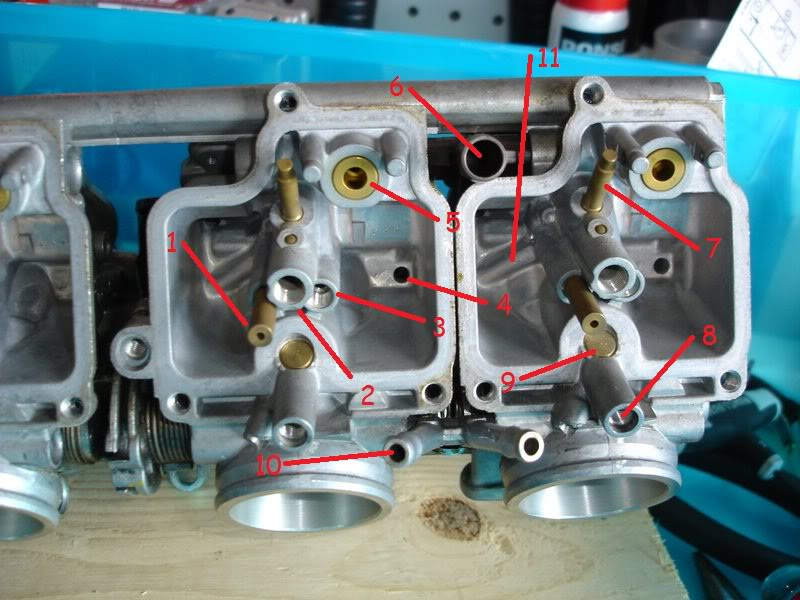
The same holds true for this side. Precicely machined passageways for fuel. The jets, and their openings connect the fuel in the bowl to passageways that allow the air from those air supplys to start mixing on there way to the throat of the carburetor. You'll notice that when you remove the jets, they extend down (or up) into the openings like a tube within a tube. This are is where the air and fuel first start to mix. Also notice that there are castings in the body of the carburetor, that are machined out that allow air and fuel to travel from one part of the carburetor to another. Since holes and only be drilled in straight lines, you'll also see brass plugs where after they drill, they plugged opening. This is usually at corners where they're trying to connect one passageway to another. I'll try to identify as many as I can here.
I hope this answers your question.
Now, for the tubes.
We'll start with the Air Intake side. Carburetors are highly engineered devices that mix air and fuel. So naturally they need places to get air and they need places to get fuel. Air and fuel start to mix before they get into the intake or throat of the carburetor.
- Air supply for idle circuit.
- Air supply for the main jet
- Air supply for slow jet
- 2nd air supply for slow jet
- Plugged supply - passage used for Air-Cut circuit to help prevent backfire during decelleration
- Air supply for lower half of vacuum diaphram chamber.
Now, for the Fuel side.
The same holds true for this side. Precicely machined passageways for fuel. The jets, and their openings connect the fuel in the bowl to passageways that allow the air from those air supplys to start mixing on there way to the throat of the carburetor. You'll notice that when you remove the jets, they extend down (or up) into the openings like a tube within a tube. This are is where the air and fuel first start to mix. Also notice that there are castings in the body of the carburetor, that are machined out that allow air and fuel to travel from one part of the carburetor to another. Since holes and only be drilled in straight lines, you'll also see brass plugs where after they drill, they plugged opening. This is usually at corners where they're trying to connect one passageway to another. I'll try to identify as many as I can here.
- Idle Jet (not removable, but highly important to enable the engine to idle properly.
- Main Jet/Needle Jet Holder (two pieces, one screwed the other).
- Slow Jet (low speed to half throttle).
- Air Supply for atmospheric pressure.
- Fuel supply seat for Float Valve.
- Fuel supply from fuel pump.
- Tube where Main Needle sits while in resting position.
- Pilot Screw (needs to be removed for proper cleaning, you should turn it in until it stops, counting the number of turns so you can put it back to where it came from if you're not going to be adjusting it).
- Plug for idle mixture supply passageway.
- Engine coolant to help prevent freezing of carburetors. Keeps throat warm.
- Hidden passageway for Choke fuel supply.
I hope this answers your question.

Senior Member
Joined: Jul 2010
Posts: 111
Likes: 0
From: U.K,clacton-on-sea,essex
i vote this should be a sticky,should help alot of people understand some of the functions of the carburetor A++ for the write up
Apology accepted, your right the pictures suck, but they get the point across. In answer to your question, yes it will effect the operation of the carburetor and you need to get it out. Since it's broken, I'd use a pair of small vice-grips to grab it and try to twist it out. Just order a new slow jet to replace it.
Now, for the tubes.
We'll start with the Air Intake side. Carburetors are highly engineered devices that mix air and fuel. So naturally they need places to get air and they need places to get fuel. Air and fuel start to mix before they get into the intake or throat of the carburetor.

Now, for the Fuel side.
The same holds true for this side. Precicely machined passageways for fuel. The jets, and their openings connect the fuel in the bowl to passageways that allow the air from those air supplys to start mixing on there way to the throat of the carburetor. You'll notice that when you remove the jets, they extend down (or up) into the openings like a tube within a tube. This are is where the air and fuel first start to mix. Also notice that there are castings in the body of the carburetor, that are machined out that allow air and fuel to travel from one part of the carburetor to another. Since holes and only be drilled in straight lines, you'll also see brass plugs where after they drill, they plugged opening. This is usually at corners where they're trying to connect one passageway to another. I'll try to identify as many as I can here.

I hope this answers your question.
Now, for the tubes.
We'll start with the Air Intake side. Carburetors are highly engineered devices that mix air and fuel. So naturally they need places to get air and they need places to get fuel. Air and fuel start to mix before they get into the intake or throat of the carburetor.
- Air supply for idle circuit.
- Air supply for the main jet
- Air supply for slow jet
- 2nd air supply for slow jet
- Plugged supply - passage used for Air-Cut circuit to help prevent backfire during decelleration
- Air supply for lower half of vacuum diaphram chamber.
Now, for the Fuel side.
The same holds true for this side. Precicely machined passageways for fuel. The jets, and their openings connect the fuel in the bowl to passageways that allow the air from those air supplys to start mixing on there way to the throat of the carburetor. You'll notice that when you remove the jets, they extend down (or up) into the openings like a tube within a tube. This are is where the air and fuel first start to mix. Also notice that there are castings in the body of the carburetor, that are machined out that allow air and fuel to travel from one part of the carburetor to another. Since holes and only be drilled in straight lines, you'll also see brass plugs where after they drill, they plugged opening. This is usually at corners where they're trying to connect one passageway to another. I'll try to identify as many as I can here.
- Idle Jet (not removable, but highly important to enable the engine to idle properly.
- Main Jet/Needle Jet Holder (two pieces, one screwed the other).
- Slow Jet (low speed to half throttle).
- Air Supply for atmospheric pressure.
- Fuel supply seat for Float Valve.
- Fuel supply from fuel pump.
- Tube where Main Needle sits while in resting position.
- Pilot Screw (needs to be removed for proper cleaning, you should turn it in until it stops, counting the number of turns so you can put it back to where it came from if you're not going to be adjusting it).
- Plug for idle mixture supply passageway.
- Engine coolant to help prevent freezing of carburetors. Keeps throat warm.
- Hidden passageway for Choke fuel supply.
I hope this answers your question.

Thread
Thread Starter
Forum
Replies
Last Post


