


How To: Repair Your F3 Fuel Pump



Thread Starter
|
Super Moderator
Joined: Aug 2006
Posts: 5,304
Likes: 512
From: South Florida, USA
 Update
Update:
Well, here's an update on how it's been performing. This original repair was done last October. She's put about 5500 miles on it since then. Last week we went for a short ride and it started getting that "running out of gas" feeling again. I was riding her bike, so I put my hand on the fuel pump and I could tell it wasn't pumping. Tapped it a couple of times with my hand and it started running again. Rode home and looked at the pump after it cooled off. The contact were burnt up again. I ordered another set from CycleGear and by the end of the week the new set was here. I have a side by side comparison of the Old and New contacts. The new ones are in and the pump is running fine again. Getting clear close-ups of the actual contact points is not easy
Old Contacts - 5,500 miles on them.

New Contacts
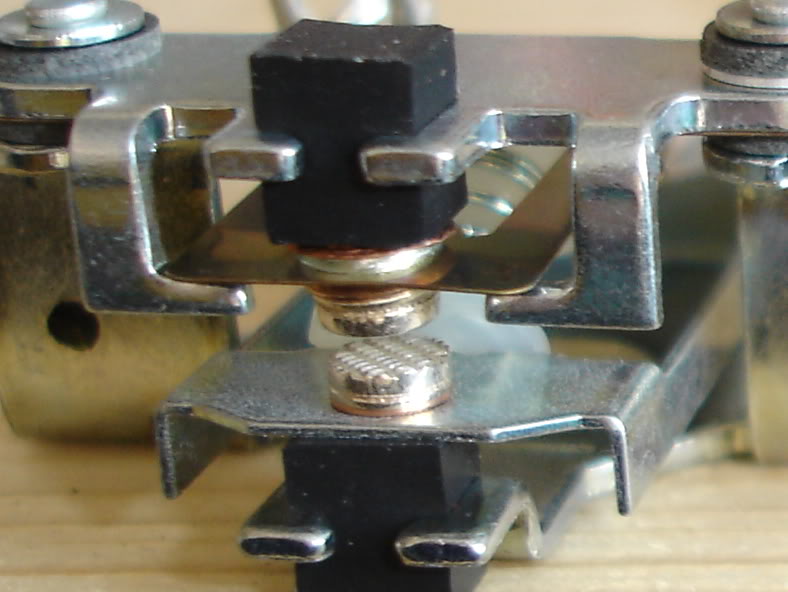
Well, here's an update on how it's been performing. This original repair was done last October. She's put about 5500 miles on it since then. Last week we went for a short ride and it started getting that "running out of gas" feeling again. I was riding her bike, so I put my hand on the fuel pump and I could tell it wasn't pumping. Tapped it a couple of times with my hand and it started running again. Rode home and looked at the pump after it cooled off. The contact were burnt up again. I ordered another set from CycleGear and by the end of the week the new set was here. I have a side by side comparison of the Old and New contacts. The new ones are in and the pump is running fine again. Getting clear close-ups of the actual contact points is not easy
Old Contacts - 5,500 miles on them.
New Contacts


Junior Member
Joined: Oct 2010
Posts: 6
Likes: 1
Thanks for the wonderful write up. I have a 2000 CBR F4 that i just bought. It has been sitting with gas in it for about 2 years now. I finished draining the tank and looks like there is some rust that needs to be addressed. Main question is - how did you check the fuel pump? Your video shows the functioning of the fuel pump, did you connect 12 v to the two leads on the pump or short the wires at the relay?
Thanks in advance.
Thanks in advance.
Thread Starter
|
Super Moderator
Joined: Aug 2006
Posts: 5,304
Likes: 512
From: South Florida, USA
No, I didn't do anything that complicated. I just started the bike. There was enough fuel in the carbs for the bike to run for several minutes without the pump attached. If your bike won't start, then using either of the methods you mention would be fine. I would think that jumping the wires at the relay would be the easiest, you can just use a paperclip (don't let it touch the frame though).


Junior Member
Joined: Jul 2010
Posts: 6
Likes: 1
From: Brisbane, QLD
Thanks so much, I just finished repairing my pump. I knew about the repair kit before but didn't have the confidence to do it until I found your how-to.
A few thoughts about the pump itself:
It is just an auxiliary pump that maintains pressure when fuel is low. With a full tank you don't need it; I know this because my bike would still run with a full tank even though the pump contacts were completely burned out (worse than in the how-to photos in fact). Then when fuel got low I'd end up at the side of the road. In that case I suppose deliberately running the tank to reserve -- which many of us do habitually as a way of measuring fuel consumption -- is likely to put more strain on the pump and wear the contacts quicker (because it runs faster the lower the gravitational pressure from the tank).
If the O-ring seal on the pump is breached and the contacts get dirty they can stick or seize. Make sure that's not the problem before you buy the repair kit. A good squirt of WD40 around the hinge and spring on the contacts might help.
The fuel hose from the pump to the carbs should turn right and then left before it splits in two at a joint to feed the carbs. Mine was twisted so it turned DOWN then UP and then met the joint at an angle. When I drained the float bowls I found less fuel in cylinder 3's bowl and less still in cylinder 4's. Straightening out the hose fixed that. I also cut about an inch off the hose because it was turning back on itself a bit (the first bend in the hose was an acute rather than a right-angle).
Great write-up, thanks again.
A few thoughts about the pump itself:
It is just an auxiliary pump that maintains pressure when fuel is low. With a full tank you don't need it; I know this because my bike would still run with a full tank even though the pump contacts were completely burned out (worse than in the how-to photos in fact). Then when fuel got low I'd end up at the side of the road. In that case I suppose deliberately running the tank to reserve -- which many of us do habitually as a way of measuring fuel consumption -- is likely to put more strain on the pump and wear the contacts quicker (because it runs faster the lower the gravitational pressure from the tank).
If the O-ring seal on the pump is breached and the contacts get dirty they can stick or seize. Make sure that's not the problem before you buy the repair kit. A good squirt of WD40 around the hinge and spring on the contacts might help.
The fuel hose from the pump to the carbs should turn right and then left before it splits in two at a joint to feed the carbs. Mine was twisted so it turned DOWN then UP and then met the joint at an angle. When I drained the float bowls I found less fuel in cylinder 3's bowl and less still in cylinder 4's. Straightening out the hose fixed that. I also cut about an inch off the hose because it was turning back on itself a bit (the first bend in the hose was an acute rather than a right-angle).
Great write-up, thanks again.